stone products | wood, metal & more | automotive | contact
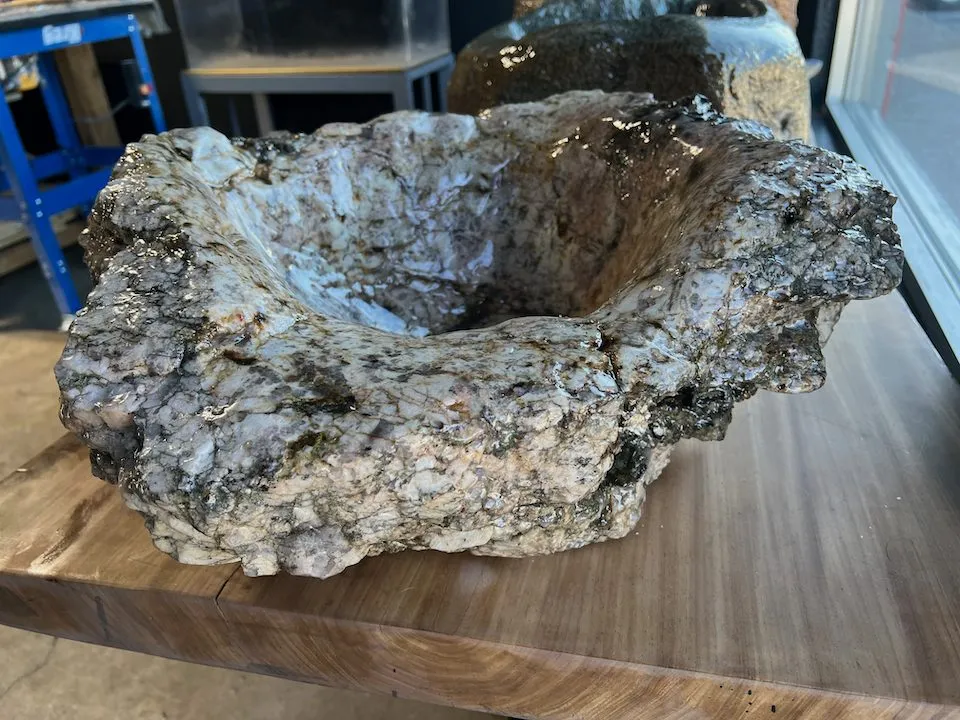
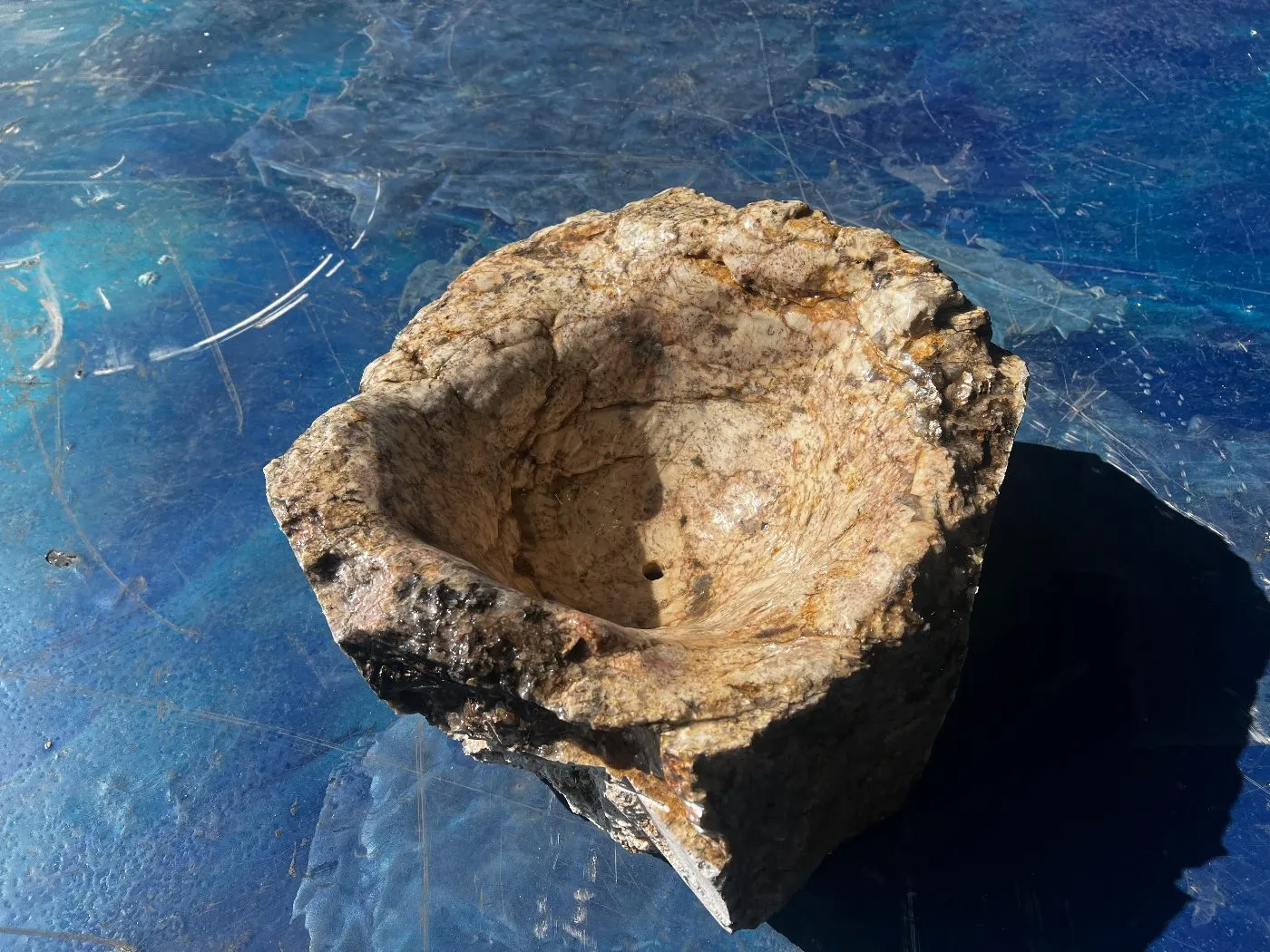
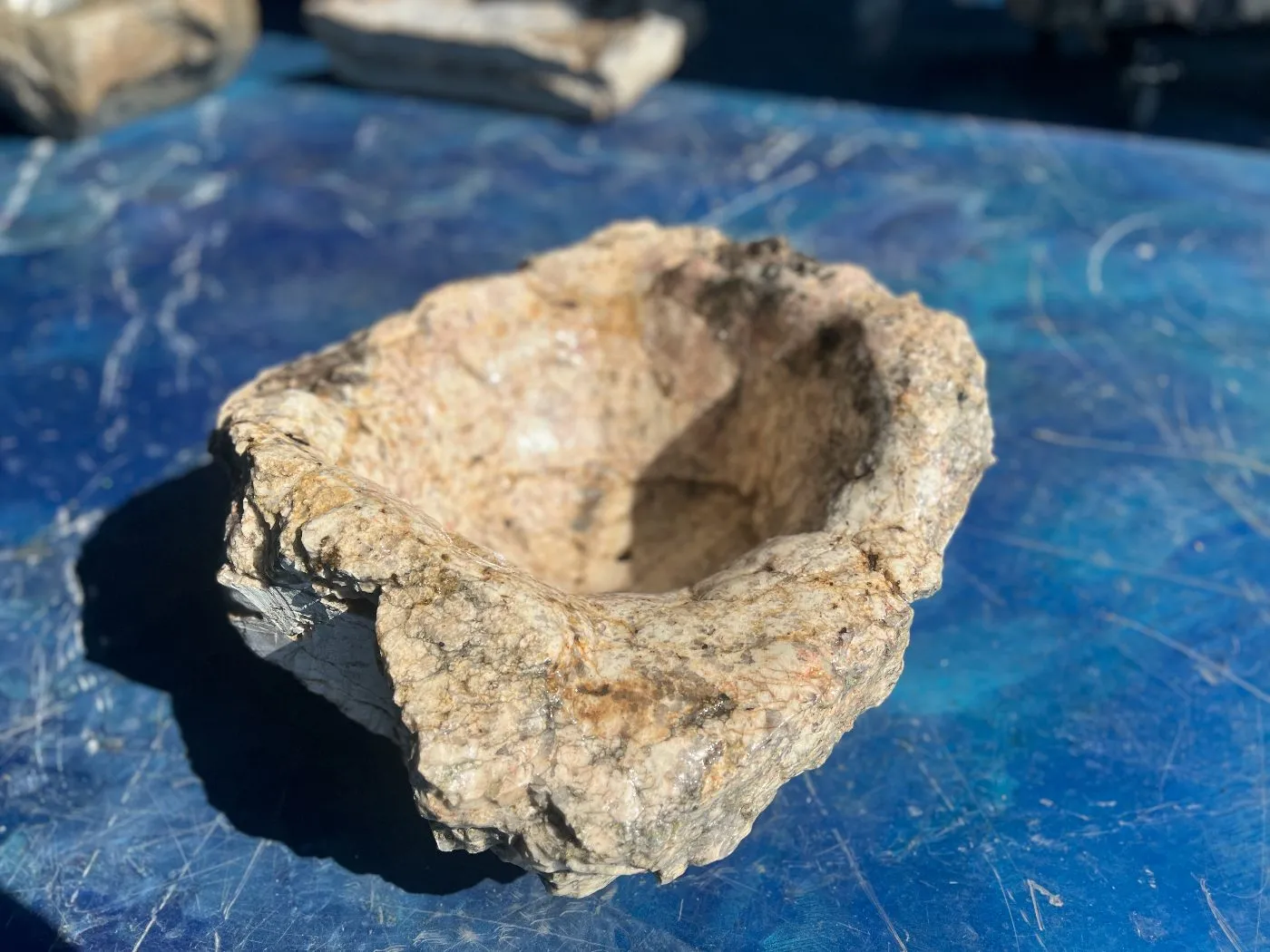
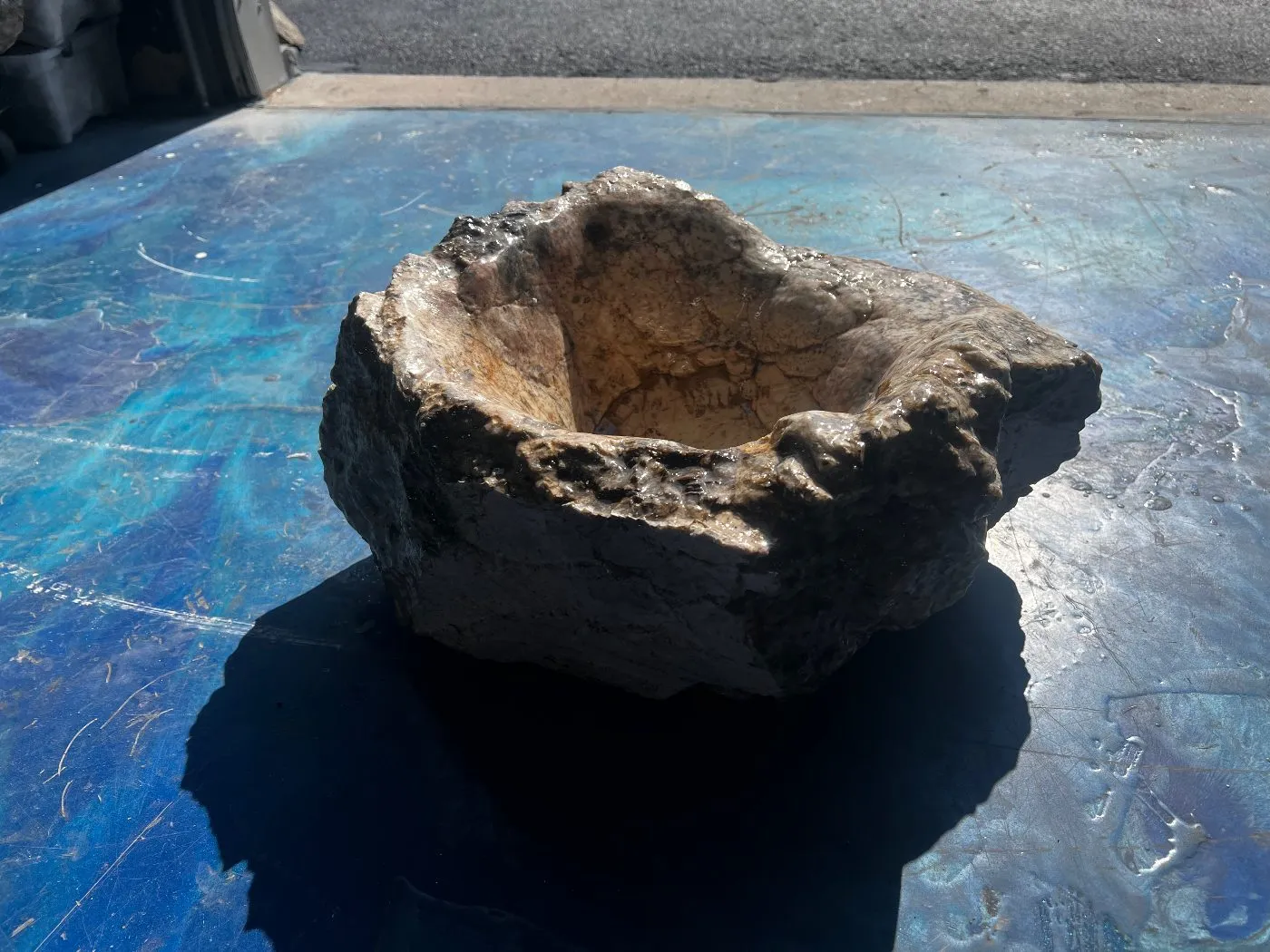
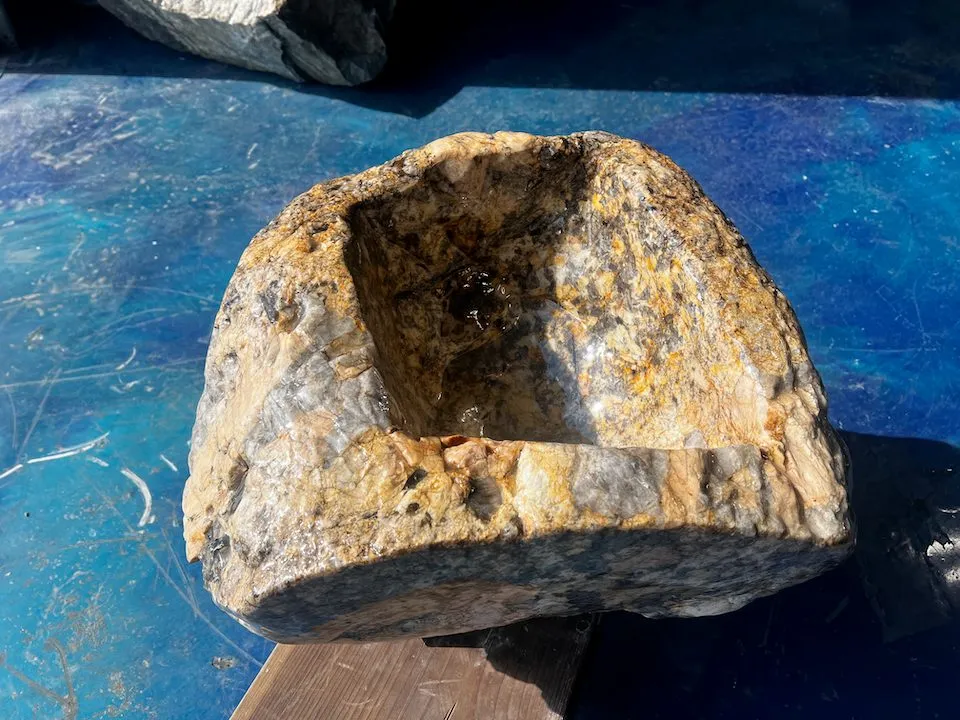
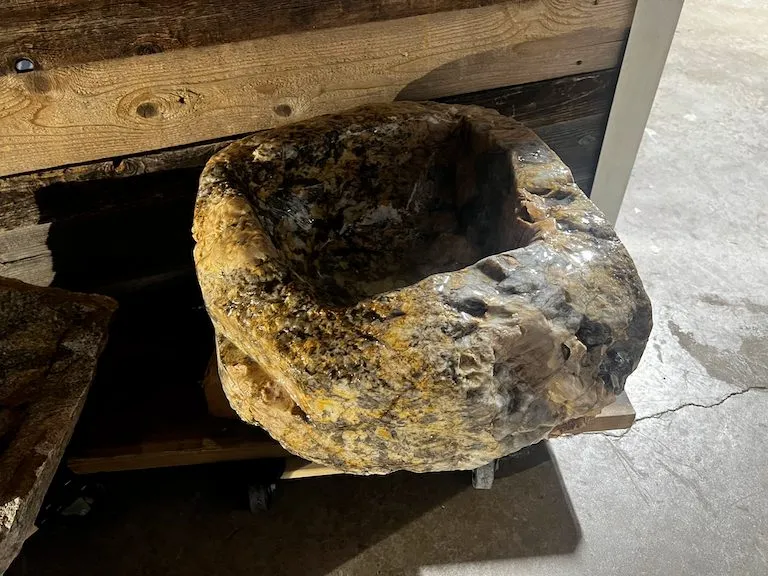
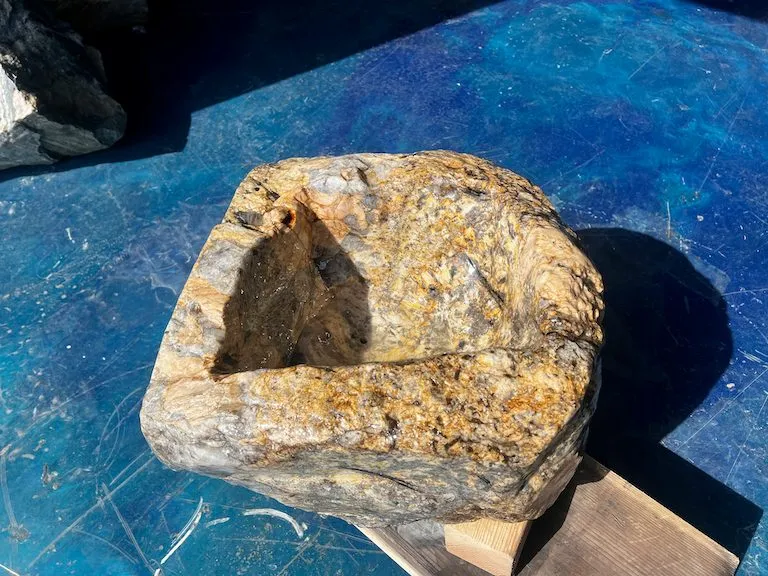
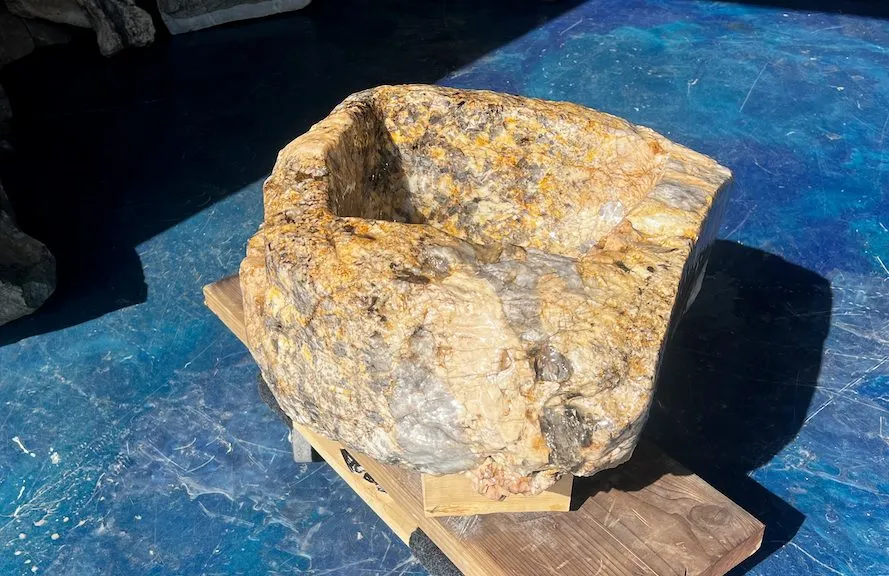
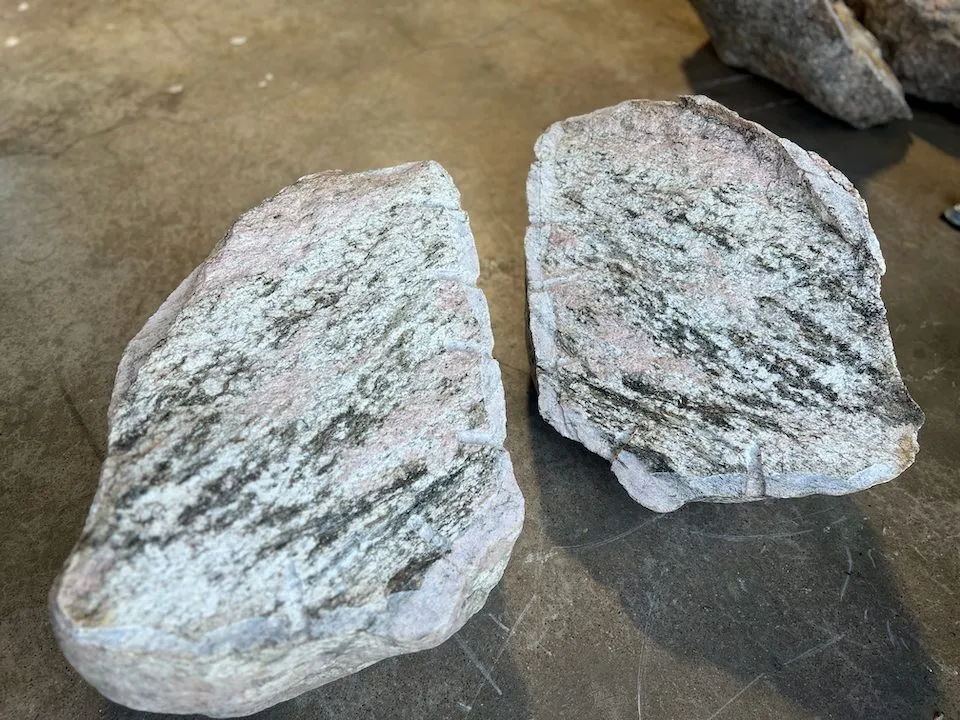
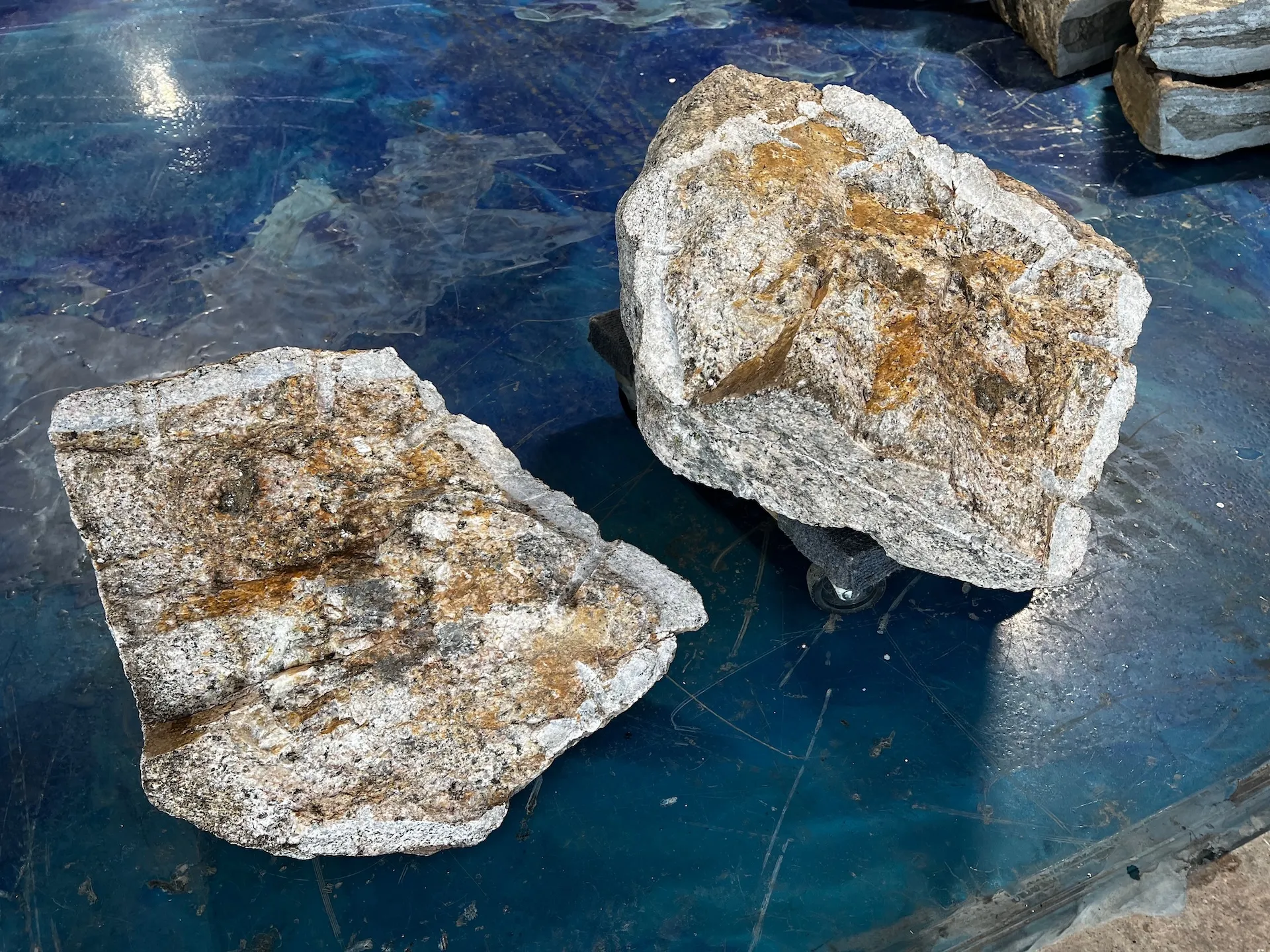
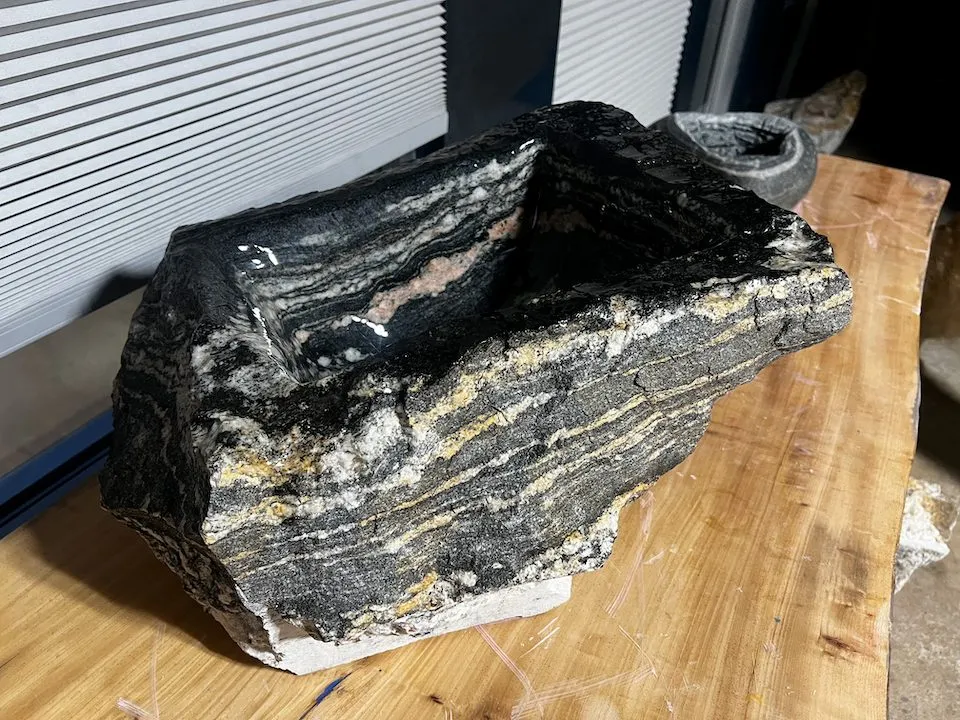
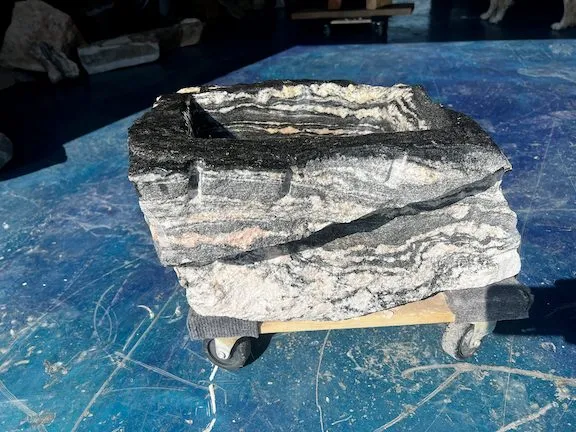
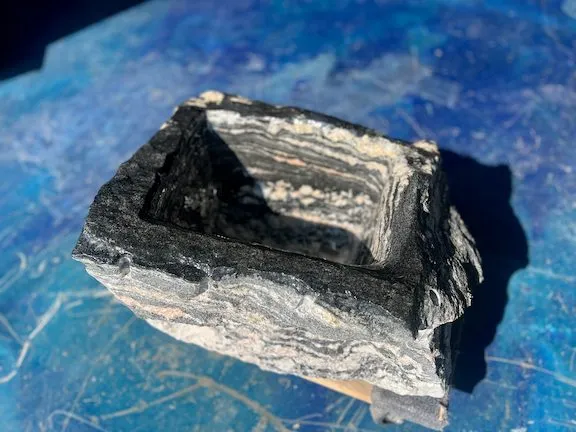
Spellbindingly unfair the layers in this stone are; contrasting colors, flowing lines & inviting visual textures
I knew they were good when I picked up the parent stone with my crane, and even more deliciously confirmed when I split it into 3 vessel sink candidates
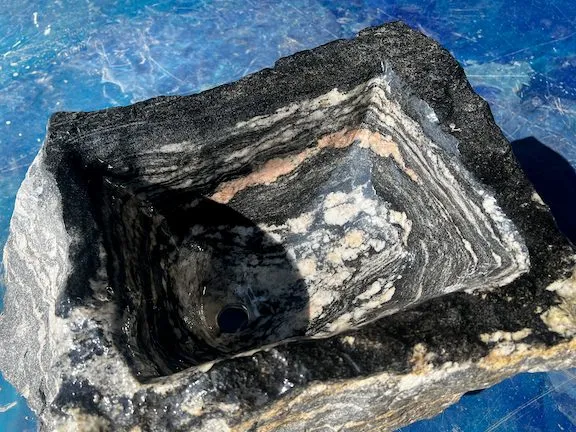
But it wasn't until the third tranche of diamond sawcutting that the pink Silver Plume granite emerged. I knew in an instant this stone was special
The grey & white layers are 1.8B years old, a felsic gniess of volcanic origin as the first island arcs were scraped onto the Wyoming Province. Then gently(?) melted in the echos of the second wave of islands. Some 400M years later the Silver Plume granite intruded, melting, reflowing, & recrystalizing into the 'Injection Gniess (Migmatite)' that we see today
Fast-forward through the rising and eroding of the Colorado Rockies to 40,000-ish years ago when the Pinedale glaciation exposed some delicate westwardly facing cliff (~14 million sunsets!!) where this rock lived, only finally to be thrown down in a violent landslide precipitated by the relentlessly grinding chewing of Clear Creek
If I-70 had been around 3 or 4 thousand years ago, you maybe could have waved at it still hanging high on the mountain as you drove by...
Quaternary-Landslide / Roadcut
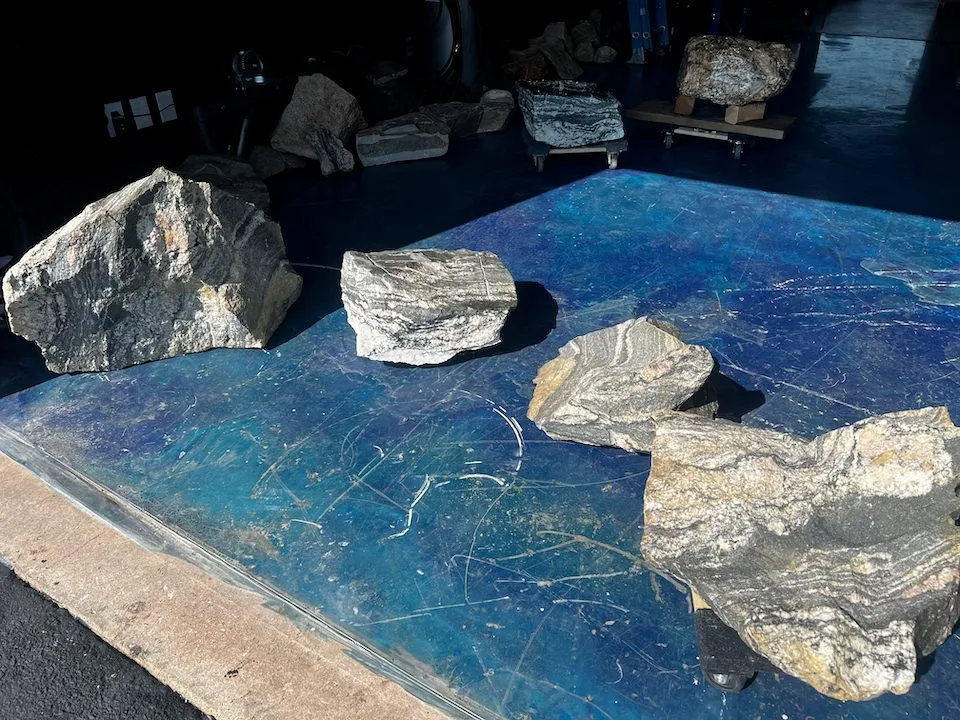
Magicians know how to exploit perspective & apparent proportionality in fun and clever ways, and still could never dance the wild lines of improbability that geochemistry & erosion & time wrought with this stone
Sneaking in just under the wire, during the final 'seconds' of the last hot gasps of the Silver Plume granites' intrusion into what would eventually be settled as the town of Empire Colorado; we find this wildly beautiful expression of hot intrusive igneous fluid surrendering and relaxing into the comfort of massive crystaline structure
The minerals in this sink and I are always the last ones to leave a party, but they more successfully commemorated the fun past by laying down next to each other and locking into perfect echos and patterns as the solution exhausted all the other more 'bland' minerals, and cooled into stone cold quiet
The pegmatite band that this stone formed inside of had to be at least several feet wide in every direction, a moltent and intractable twisting path carved into rock that lived above what we now call 'Lincoln Mountain'; a path lost to time and the scratching Laramide orogeny until the Bull Lake glaciation (my theory, scant hard evidence) cracked it loose from the embedding Felsic Gniess (Xf), where it waited a couple hundred thousand more years before the Pindale glaciation ground off all the hard corners by throwing it down into the valley (more than theory, 98% chance that's true) before some gold rush miner rolled it out of the way of the wagon road (100% probability, that definitely happened)
I played with the thickness of this stone in several ways: to higlight and showcase the massive phenocrysts and contrast them with the fascinating shapes and colors of the 'smaller' aphantic matrix embedding them, with edges and contours that hopefully entice you to grip all the sides with human sized hands and appreciate their heft, and also for the pure structural reality that this was an endlessly difficult stone to cut without shattering/fracturing.
Pinedale / Gold-rush
I have this very wonderful and very young snowy childhood memory of sledding and sliding down some north-facing mountainside near a cabin in Steamboat Colorado all day while my parents were out skiing. I had to have been quite young because my little brother isn't in this memory, and yet I think I was unsupervised, which would seem wild for a (probably) 4 or 5 year old kid; but... it was the 1980's
I couldn't have known then; but about 80 miles southeast of me there was this field of super cool rocks that had similarly slid & grinded their way down a north facing icy glacier 40,000 years before I was born; then just fell into a pile when the ice melted.
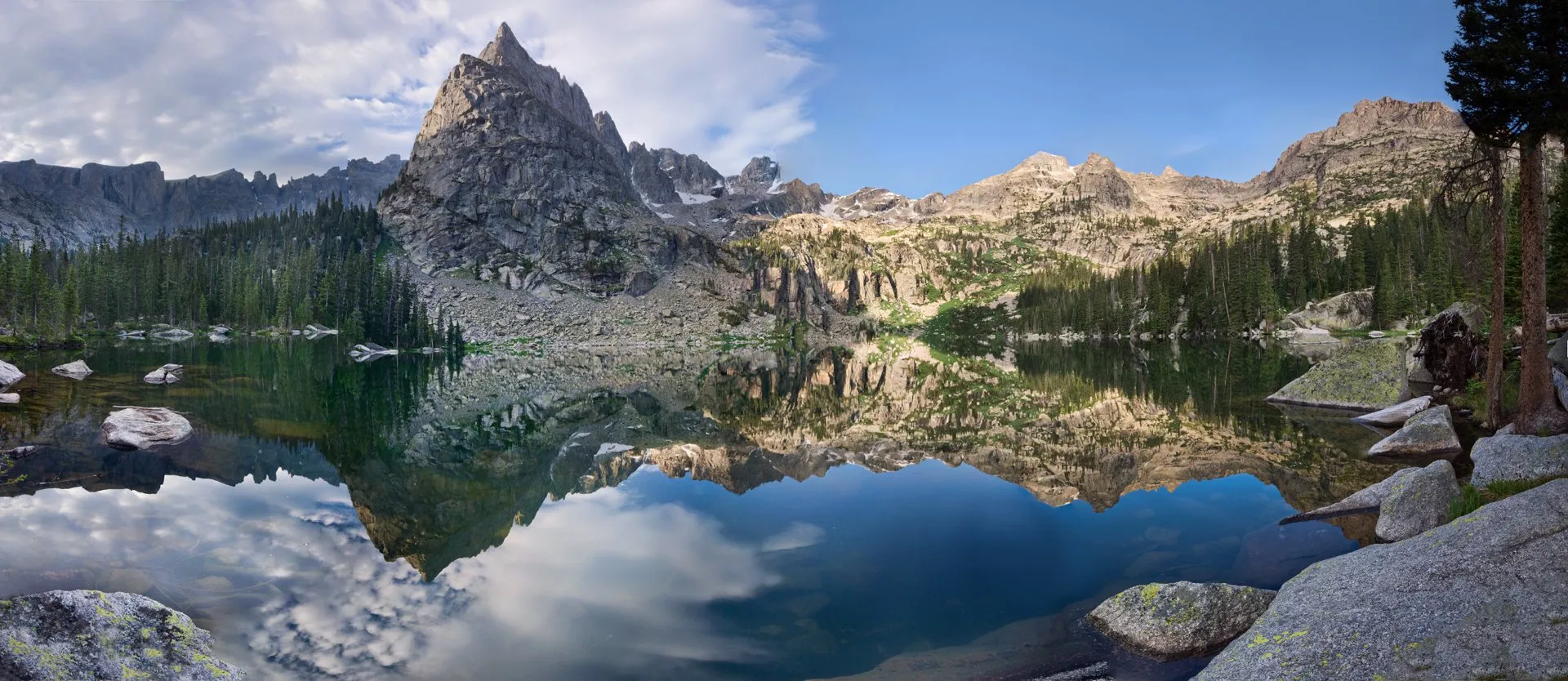
The outside of this stone was cut by the low rumbling patience of slow moving ice during the Pinedale glaciation, probably within or close to eyesight of what we now name 'Lone Eagle' peak. Then it just sat there with its' siblings while the glacier melted, and the trees and forest sprang up around it. An otherwise unremarkable hill in a quiet forest, but if you know what you're looking for...
I tried my best to honor and echo the tactile subliminality of shape which the glacier kissed the exterior with, when I scooped out the inner surface. I honestly don't know if I succeeded or failed, but I do almost always stop to run my hands over this one every time I walk by it, just to check.
Some of the inner contours were cut as a deliberate form of meditation/rememberance of poignant rock-climbs/hikes I've done in the Indian Peaks east of where this stone was born.
Pinedale, non-terminal/inner moraine
The western half of Colorado is chock full of idyllic wilderness spots to plop down and repose next to a lovely babbling brook.
But there's this one particular brook who babbles (slightly warm) water with wild concentrations of dissolved iron ions, even still to this day
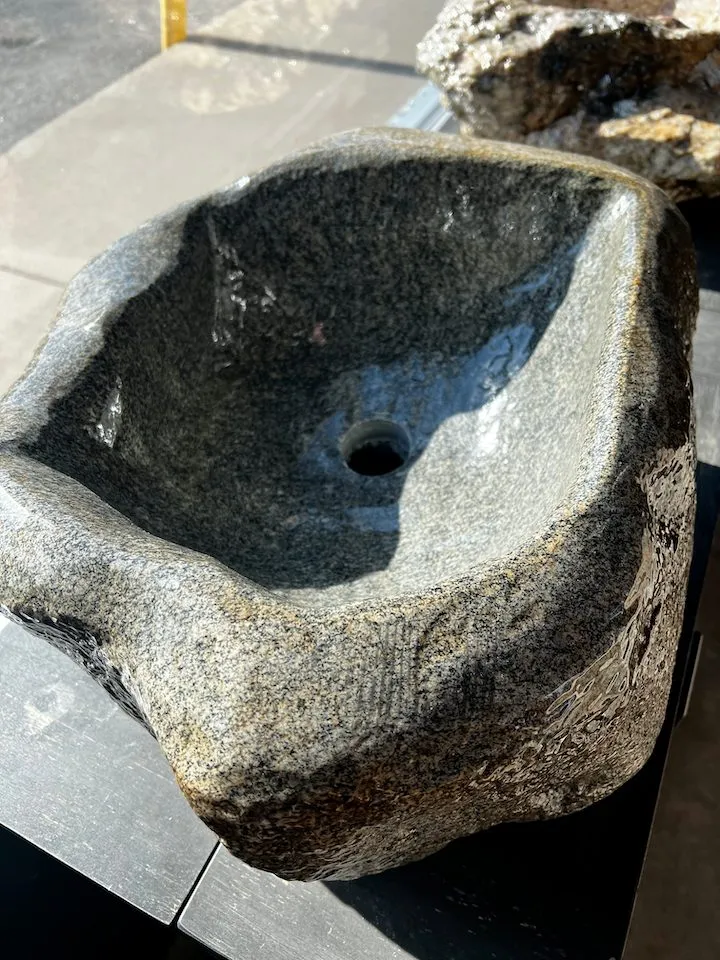
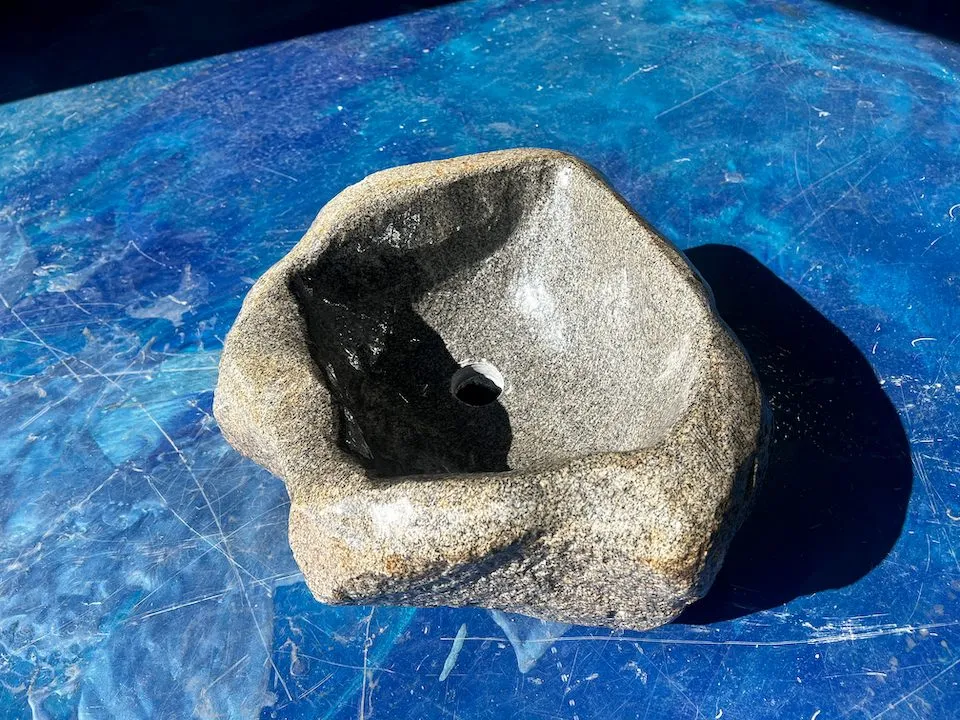
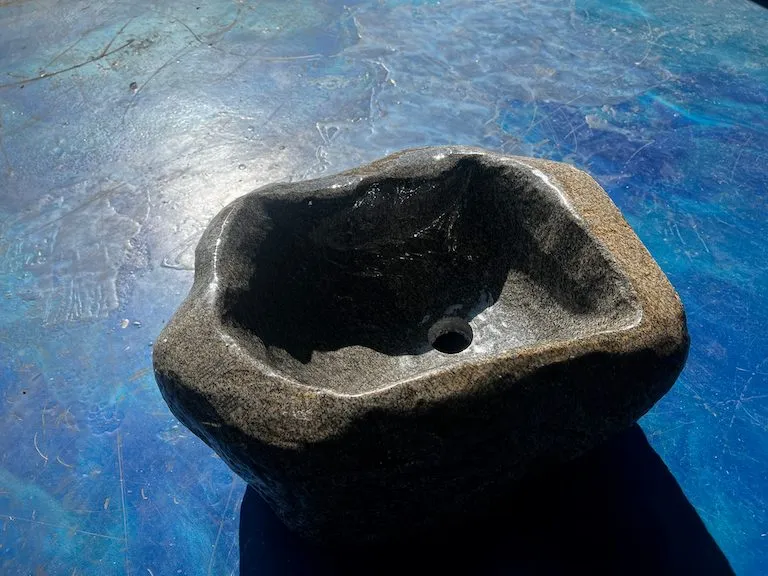
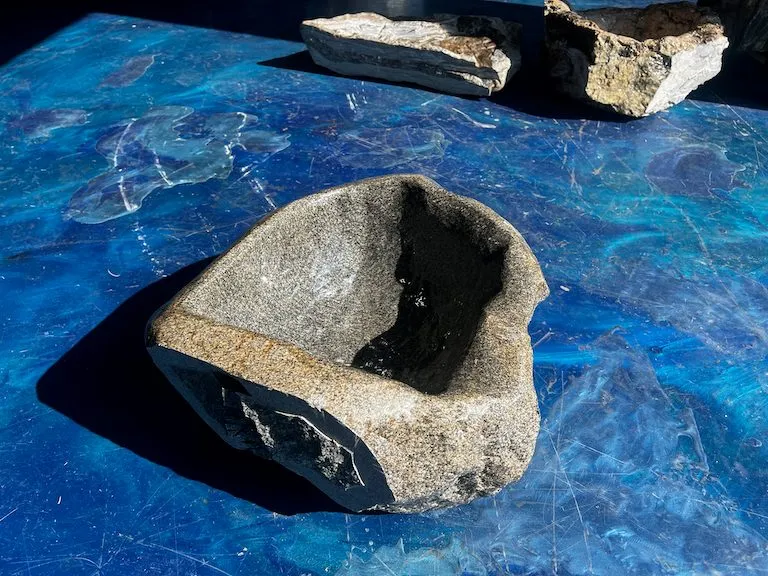
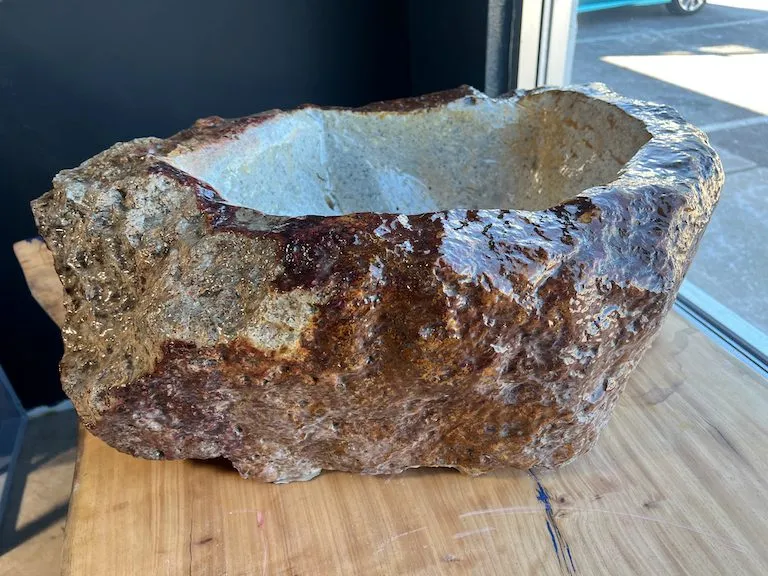
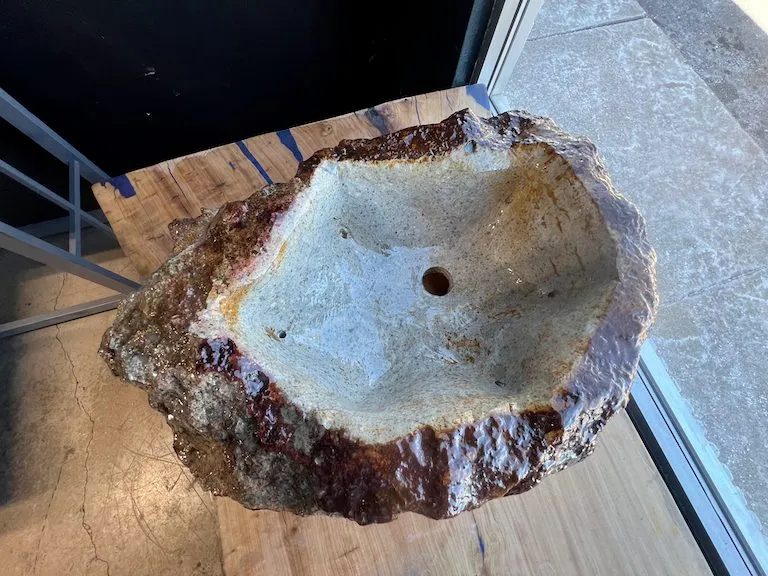
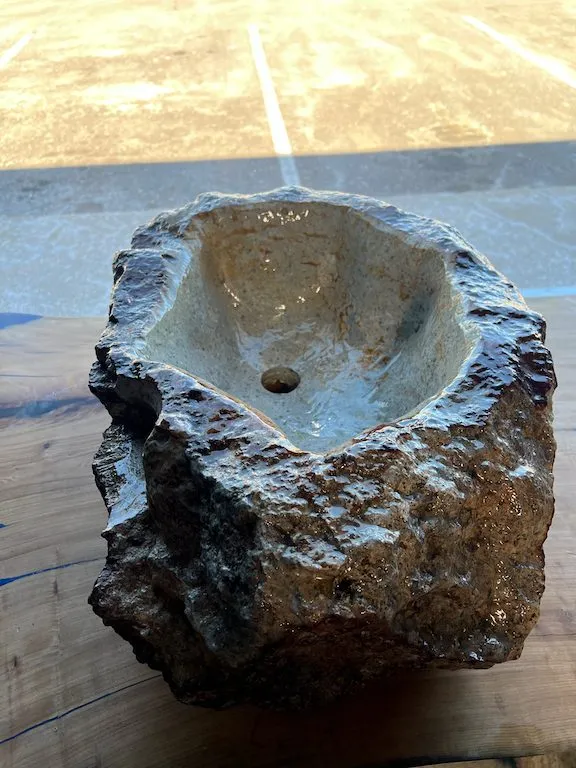
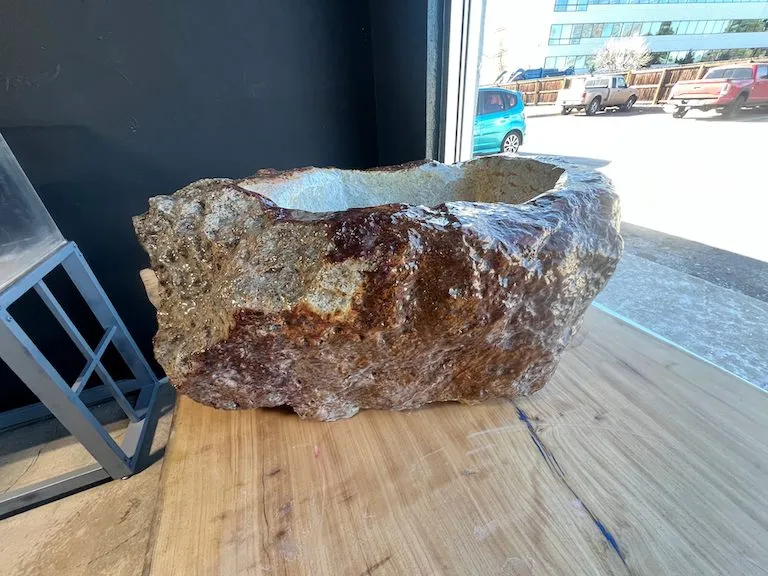
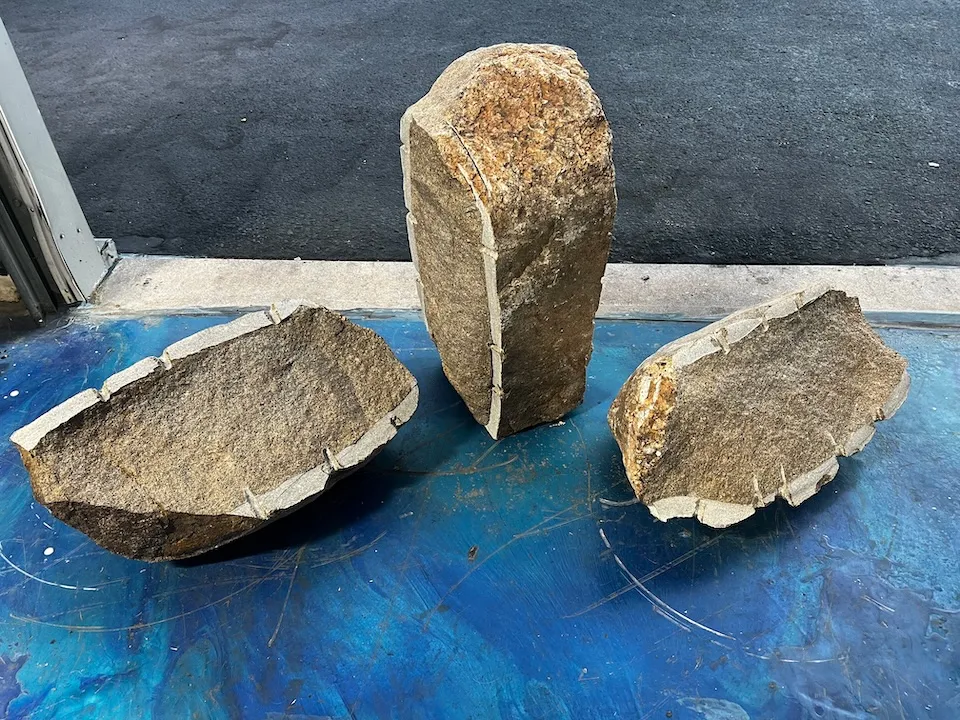
This stone originally snapped loose a bit uphill of the modern day fen, eventually sliding to rest well downstream of the protected area, so it's hard to say if the thick outer red iron accumlation took more or less than 40,000 years to form. I encased it in epoxy to preserve it regardless
The base stone is a tertiary quartz monzonite, some of the youngest granite in Colorado; and the land owner I sourced it from is definitely one of the most eccentric ones I've ever met. And the iron deposition process which painted the exterior red happens in less than a dozen other places in the world. There are probably only 7-9 more stones like this one that I can get my diamond saws on, and I shattered the first two I worked with, till I figured out the technique/touch required
The price reflects the rarity. There will only ever be 5 or 6 more like this one; so assuming anyone buys the first, I'll likely p x 2^n the price for the remainder of the series
Iron bath / post Pinedale
We're quite confident that Colorado spent most of the past 2 billion years on a tropical beach vacation, close to the equator, and close to sea level
Steadily accumulating thick layers of sandstones and limestones, which are not *bad* rocks; you see the sandstones used everywhere in flat flaky pinkish derivations as metro-Denver landscaping or layered CU-Boulder building facades, but not particularly interesting rock either
But if you bury that boring sandstone deep enough; and crush it hard enough, hot enough...
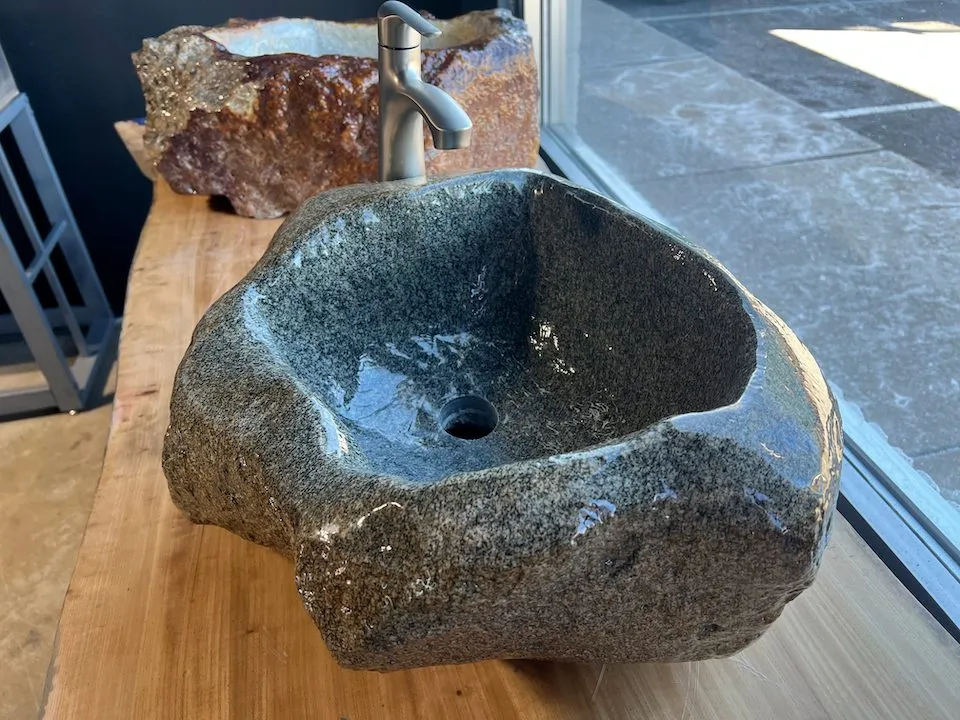
The rock melts and the minerals can reflow and recombine into the facinating colors and textures we have in this sink
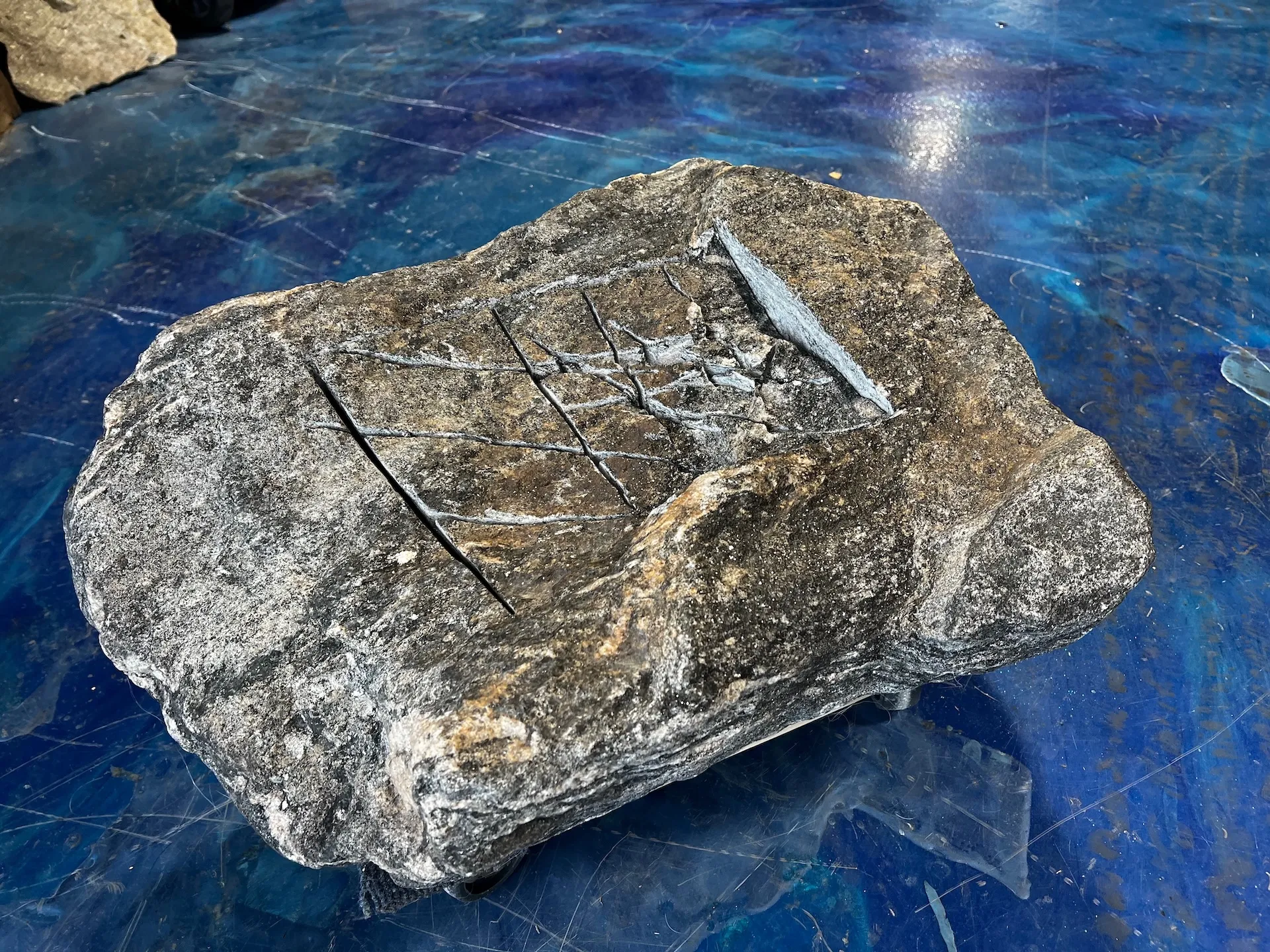
It was however, quite unremarkable and uninteresting to the gold rush miners as they carved the entrance tunnel to their mine south-east of Estes Park. They threw it aside to wait another 150 years for me to find it
I was able to work the interior into flowingly fun curvatures because the quartz and felsic minerals are so nicely distributed, even though all of the visual textures are stunningly chaotic. It's seriously one of the most fun rocks I've kissed with my diamond saws. I'm still not sure if I had more fun cutting it, or looking at it afterwards
Gold rush / Entrance tunnel discard